
Wait! Zombie Debt Collector owned by Navient, formerly Sallie Mae?

Sometimes when I trace the ownership and corporate governance of a company that I believe is misbehaving, I discover it is actually part of another larger company with a more respected reputation. Relationships like this aren’t always easy to follow, connect or confirm.
Pioneer, proudly owned by Navient

Pioneer, proudly owned by Navient

I often wonder if something that I was told a long time ago is true: when it comes right down to it, the banks and major corporations all over the world are really controlled by about five families who own it all.

I am working on a case of Zombie debt where the debt collector has been kind enough to respond to letters and has provided all kinds of information in writing that illustrates their practices. The young woman being targeted is about 6 years out of college, and the debt seems to be connected to time period during college. They must believe she is more vulnerable to Continue reading
The tools are available to stop robocalls, so why do so few telecom’s use them?

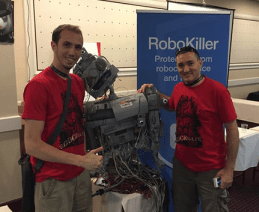
Contest Winners Ethan Garr and Bryan Moyles at DEF CON 23

Contest Winners Ethan Garr and Bryan Moyles at DEF CON 23 from FTC’s website

Why aren’t telecom companies giving us the tools we need to block robocalls?

For the past two years the FTC held contests at the international DEF CON conference, the worlds largest annual hacker’s convention held in Las Vegas, awarding prizes for the best and most effective tools to fight robocalls.  According to the FTC, last year the contest titled Zapping Rachel, named for one of the most prolific robocalls in the country, the familiar  “Rachel from card services,” was a big success:

Zapping Rachel marks the latest step in the FTC’s ongoing campaign to combat illegal, pre-recorded telemarketing calls known as robocalls. The contest challenged participants to design a robocall honeypot which is an information system designed to attract robocallers, and help law enforcement authorities, researchers, and others gain enhanced insights into robocallers’ tactics.

Three hackers were awarded prizes for their creations help officials capture these robocallers.

This year at the 2015 DEF CON 23 hackers were awarded prizes for creations that include programs that can be used by consumers. Continue reading

It all started with a $500 late fee

American Dream?

The American Dream?

Yes, a $500 late fee … that led to a long drawn out fight with the national bank who bought the little community bank that we signed a mortgage with in 1987. The case is ongoing and has taught us lessons about “allowed abuse,” how to report abuse, how to file complaints and the complex ways banks operate that may violate rules and laws that we aren’t expected to know about or understand.

We knew we were paying late. We knew a late fee, as written in our original mortgage contract, was due. That original agreement states that if we were late, we’d be charged no more than 3% of a monthly payment and states that this is reflective of state law.  We were shocked to see a $500 fee added to our statement as a “late fee.” That was in 2007. We refused to pay that fee. The bank continued to add fees because we refused to pay. They claimed by not paying those fees we were in default, threatened us and in 2008 began seven years of abusive treatment that included pre-foreclosure actions while adding fees and fines that now total over $6,000 – money that we do not intend to pay.

We’ve watched the laws change and learned as we watched the process of change, that what has been done to us by this company is in fact, illegal and each and every complaint we filed became part of a larger pattern that drove changes in mortgage regulations. But we live in a non-judicial foreclosure state and when a bank retaliates by filing documents that suggest foreclosure, even if you are people – like us –  who makes your mortgage payment on-time every month, it’s up to us to take the case to court.

The bank and their staff of lawyers can Continue reading